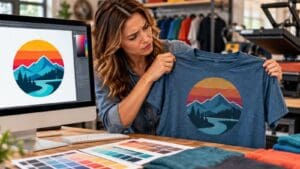
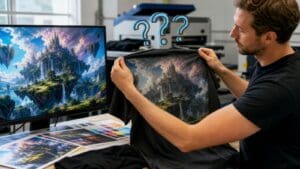
Choosing between screen printing, DTF, and embroidery can have a big impact on how your custom apparel looks, feels, and holds up over time. The right method depends on your design, garment type, order size, and the overall look you want.
In this guide, we break down when screen printing makes the most sense, when DTF is the better fit, and when embroidery gives you the most polished result.
Quick Comparison
- Choose screen printing for larger orders, bold artwork, and strong long-term durability.
- Choose DTF for small runs, full-color designs, gradients, and detailed artwork.
- Choose embroidery for polos, hats, uniforms, and designs that need a more premium, stitched look.
Understanding Screen Printing
Screen printing is one of the most widely used custom apparel printing methods. In this process, ink is pushed through a mesh screen onto the fabric using a squeegee, creating bold and long-lasting designs.
This method is particularly effective for larger orders because once the screens are prepared, multiple garments can be printed efficiently.
Screen printing works best for designs that use fewer colors and bold graphics. While it can handle multi-color designs, additional colors may increase setup time and production cost.
Benefits of screen printing include:
- Durable prints that hold up well through repeated washing
- Bright, vibrant colors that work well on dark fabrics
- Compatibility with many fabrics, including cotton and cotton blends
Screen printing is often the best option for event shirts, company tees, school apparel, and other bulk orders where you want a bold design and consistent print quality across many garments.
Exploring DTF Printing
Direct-to-Film (DTF) printing is a newer technology that allows detailed designs to be transferred onto garments using a printed film and heat press.
With this method, designs are first printed onto a specialized film and then transferred onto the fabric using heat and adhesive powder. The result is a detailed, full-color print that works well for complex graphics.
DTF is often a smart option when you need smaller quantities, highly detailed designs, or artwork with multiple colors and fine elements that would be less practical with screen printing.
Advantages of DTF printing include:
- High-resolution prints with excellent detail
- Ability to print multi-color or photographic designs
- Works on a wide range of fabrics including polyester blends and synthetic materials
- Efficient for small and medium-sized orders
While DTF prints are durable, they may not last quite as long as traditional screen prints. However, the flexibility and detail make DTF an excellent option for many custom apparel projects.
Embroidery for a Premium Finish
Embroidery uses thread stitched directly into fabric to create logos and designs. Unlike ink-based printing methods, embroidery creates a textured, dimensional appearance that adds a professional and premium feel.
This method is commonly used for business uniforms, hats, polos, and other professional apparel where durability and presentation are important.
Embroidery offers several advantages:
- Long-lasting designs that resist fading or cracking
- A high-end, professional appearance
- Excellent durability for workwear and uniforms
Embroidery works best for logos, lettering, and simple graphics. Very detailed artwork or photo-style images may not translate well into stitched designs.
Fabric Considerations for Each Print Method
Fabric type plays an important role when choosing custom apparel printing methods. Different materials respond differently to ink, thread, and heat, which can affect the final result.
Cotton fabrics
Cotton works well with both screen printing and DTF printing, producing vibrant colors and a comfortable finish.
Polyester blends
These fabrics are often used with DTF printing and embroidery. Polyester blends are common in athletic apparel and performance wear.
Synthetic fabrics
Synthetic materials typically perform best with DTF printing, especially when detailed designs are required.
Twill fabrics
Twill materials are commonly used for embroidery projects and provide a durable base for stitched logos.
Moisture-wicking fabrics
These fabrics often work best with DTF printing or light embroidery to maintain breathability and performance.
Considering the fabric before production helps ensure the final design looks sharp and performs well over time.
Comparing Custom Apparel Printing Methods
Selecting the right printing method depends on several factors including design complexity, order size, fabric type, and desired finish.
| Method | Best For | Strengths | Limitations |
|---|---|---|---|
| Screen Printing | Large orders, simple designs | Durable, vibrant colors | Setup cost for small orders |
| DTF Printing | Small to medium orders, detailed artwork | High detail, multi-color designs | Slightly less durable |
| Embroidery | Logos and professional apparel | Premium look, long lasting | Not suited for detailed graphics |
Each method serves a different purpose depending on the project requirements.
Screen printing is often the best choice for large batches of apparel. DTF printing works well for detailed designs or smaller orders. Embroidery provides a premium finish for professional garments.
Which Method Is Right for Your Project?
- If you need 100 event shirts with a simple logo, screen printing is often the best fit.
- If you need 12 shirts with a colorful, detailed design, DTF is usually the better option.
- If you need polos or hats for staff uniforms, embroidery is often the strongest choice.
- If your design includes small details, gradients, or photo-style elements, DTF will usually reproduce them more cleanly than screen printing or embroidery.
- If you want a more professional, textured finish, embroidery is usually the better choice.
Making the Best Choice for Every Project
Choosing the right custom apparel printing method ensures your garments meet expectations for appearance, durability, and overall quality.
Several factors should be considered before selecting a printing method:
- Order size – Screen printing works well for large quantities, while DTF is ideal for smaller runs
- Design complexity – Detailed artwork often performs best with DTF printing
- Fabric type – Materials like cotton, polyester blends, or performance fabrics can affect print results
- Durability requirements – Embroidery offers exceptional longevity for uniforms and work apparel
- Desired appearance – From bold screen prints to textured embroidery, each method creates a different finish
Matching the project with the appropriate printing technique helps ensure the final apparel looks professional and performs well over time.
Frequently Asked Questions
Which custom apparel printing method is best for large orders?
Screen printing is typically the most cost-effective option for large quantities. It produces vibrant, long-lasting prints and works well on common materials like cotton.
Can DTF printing be used on different fabrics?
Yes. DTF printing works on many types of fabrics, including cotton, polyester blends, and synthetic materials. However, extremely textured fabrics may require testing.
Is embroidery good for detailed artwork?
Embroidery works best for logos, lettering, and simple designs. Highly detailed artwork or photo-style graphics may not translate well into stitched designs.
How does fabric choice affect printing results?
Fabric type can affect how ink or thread adheres to the garment. Cotton holds ink well for screen printing, while thicker fabrics often work better for embroidery.
What is the best printing method for small custom orders?
DTF printing is often the most efficient option for smaller orders because it requires minimal setup and can reproduce detailed designs.
Ready to Bring Your Custom Apparel Idea to Life?
Whether you’re designing shirts for a school event, business promotion, sports team, fundraiser, or group trip, Anytime Tees makes the process simple from start to finish.
We offer high-quality custom t-shirt printing, bulk order discounts, fast turnaround times, and professional design support to ensure your apparel looks exactly how you imagined it.
From bold graphics to clean, minimalist logos, our team helps you choose the right shirts, printing method, and sizing options for your project.
Start your custom apparel order today and see why so many customers trust Anytime Tees for dependable quality and service.
Contact Anytime Tees now to get your custom quote and begin your design.